EXECUTIVE SUMMARY
Bitcoin has emerged as a transformative financial innovation, often compared to gold and other store-of-value assets. This paper examines Bitcoin’s resilience, adoption growth, institutional interest and macroeconomic relevance. Utilizing historical data, market trends and statistical analysis—this paper demonstrates why Bitcoin is not a fleeting phenomenon but a long-term financial asset. As global economies face increasing inflation and currency devaluation, Bitcoin’s decentralized and scarce nature provides an alternative financial system, free from governmental control and monetary manipulation.
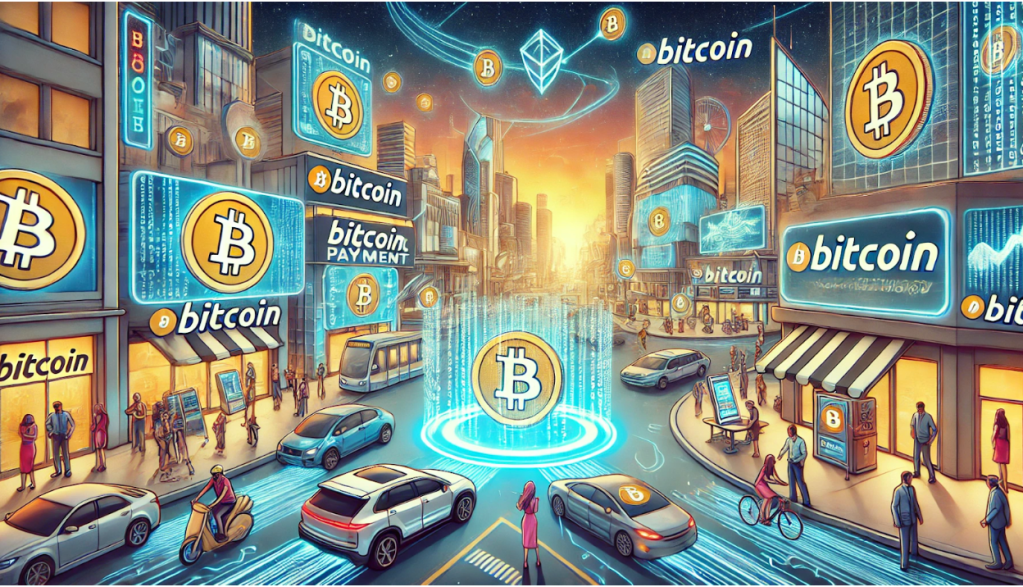
INTRODUCTION
Bitcoin, launched in 2009 by an anonymous creator known as Satoshi Nakamoto, has faced skepticism, volatility and regulatory scrutiny. Despite these challenges, Bitcoin has continued to grow in market capitalization, institutional adoption and public awareness. Initially perceived as an experiment in decentralized finance—Bitcoin has since evolved into a recognized digital asset with substantial investment interest from retail and institutional participants. This paper explores the key factors underpinning Bitcoin’s long-term viability—including historical price performance, institutional adoption, increasing user participation, regulatory recognition and its unique monetary policy.
BITCOIN’S HISTORICAL PERFORMANCE
Bitcoin’s price history reflects volatility but also consistent upward trends. Since its inception, Bitcoin has experienced multiple boom-and-bust cycles, yet each cycle has resulted in a higher baseline price. The first major bull run occurred in 2013 when Bitcoin crossed the $1,000 mark for the first time. Subsequent cycles in 2017 and 2021 saw Bitcoin reach $20,000 and $69,000, respectively. Despite corrections following these peaks, Bitcoin has continued to recover and surpass previous highs.
Bitcoin’s resilience in the face of financial crises and global economic downturns further supports its staying power. Unlike traditional assets, Bitcoin operates on a decentralized network, making it immune to direct manipulation by central banks or governmental monetary policies.
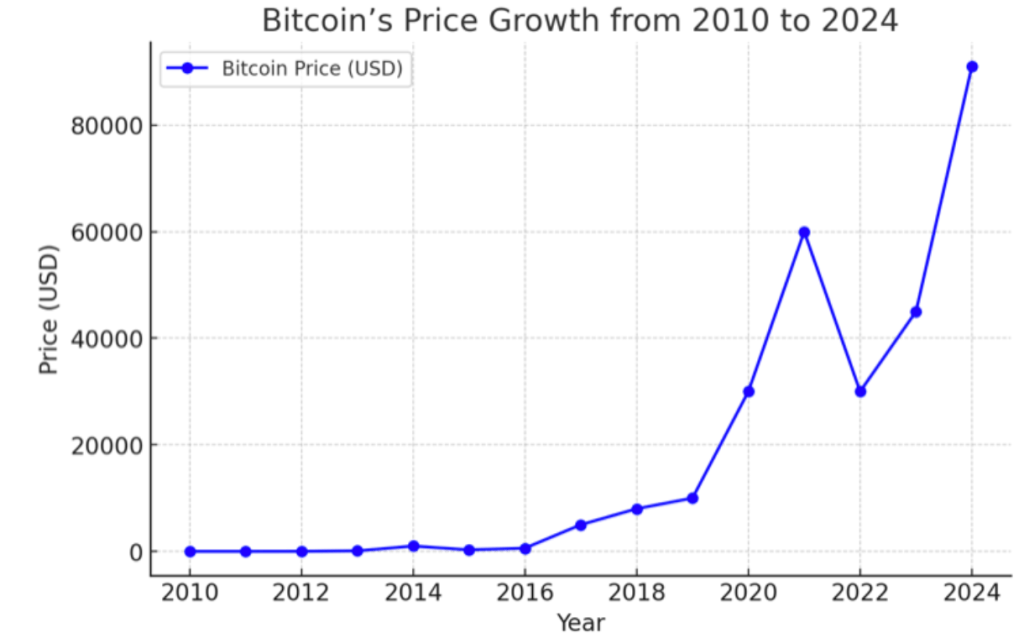
Graph 1: Bitcoin’s Price Growth from 2010 to 2024 (Graph illustrating Bitcoin’s historical price increase)
FINANCIAL INSTITUTIONAL ADOPTION
Large corporations and financial institutions have recognized Bitcoin’s potential as a hedge against inflation and currency devaluation. Companies such as MicroStrategy, Tesla, and Square have incorporated Bitcoin into their balance sheets, while financial giants like BlackRock and Fidelity have launched Bitcoin investment products. The introduction of Bitcoin exchange-traded funds (ETFs) has further legitimized Bitcoin as an investable asset for institutional investors.
Major financial services companies, including Visa and PayPal, have integrated Bitcoin into their platforms, allowing millions of users worldwide to transact with Bitcoin seamlessly. The increasing institutional adoption has contributed to greater price stability and credibility—reducing Bitcoin’s historical volatility over time.

Graph 2: Institutional Bitcoin Holdings Over Time (Graph showing the increasing Bitcoin holdings of major institutions)
USER ADOPTION
Bitcoin’s adoption has grown significantly among retail users, investors, and businesses. The number of Bitcoin wallets has increased exponentially, driven by factors such as rising awareness, ease of access and advancements in financial technology. Peer-to-peer transactions and remittances using Bitcoin have surged—making it an increasingly viable alternative to traditional banking systems.
A key indicator of Bitcoin’s adoption is the growing number of users. Over the past decade, the number of Bitcoin users has risen from just a few million to nearly 200 million globally. This increase highlights Bitcoin’s acceptance as a financial asset and means of transaction. The adoption curve suggests that Bitcoin is still in its early stages of mass adoption, with further growth potential in underbanked and developing economies where traditional banking infrastructure is limited.

Graph 3: Bitcoin User Adoption Over Time (Graph showing Bitcoin’s increasing user base over the years)
REGULATORY AND GOVERNMENTAL ACKNOWLEDGMENT
Governments worldwide are increasingly acknowledging Bitcoin as a legitimate asset. Some countries, such as El Salvador, have adopted Bitcoin as legal tender, while others are developing regulatory frameworks to integrate Bitcoin into the financial system. The United States, European Union, and other major economies have initiated discussions on Bitcoin regulations, focusing on consumer protection, anti-money laundering measures and taxation policies.
Additionally, some governments are beginning to explore the idea of holding Bitcoin as part of their strategic reserves. In the United States, certain states, including Florida, have proposed initiatives to create Bitcoin reserves, recognizing its potential as a hedge against inflation and a counterbalance to traditional fiat reserves. Similarly, discussions at the federal level have explored the feasibility of incorporating Bitcoin into sovereign wealth strategies. Other countries, such as Switzerland and the United Arab Emirates, have also considered leveraging Bitcoin as part of their national financial strategies.
While some governments remain cautious or adversarial toward Bitcoin, the overall trend indicates a move toward regulatory clarity rather than outright bans. The introduction of regulatory frameworks provides a more stable environment for Bitcoin’s growth—encouraging broader adoption among both individuals and institutions. As more nations explore Bitcoin as a strategic asset—its role in the global financial system will continue to solidify.
SCARCITY AND MONETARY POLICY
Bitcoin’s fixed supply of 21 million coins makes it a deflationary asset, contrasting with fiat currencies subject to inflation. The halving events, which occur approximately every four years, further reduce the rate of new Bitcoin issuance, creating supply constraints that historically drive price appreciation.
Bitcoin’s decentralized monetary policy ensures that no central authority can arbitrarily increase the supply—providing long-term stability. This characteristic makes Bitcoin attractive to investors seeking an asset with predictable issuance and resistance to inflationary pressures seen in traditional currencies.
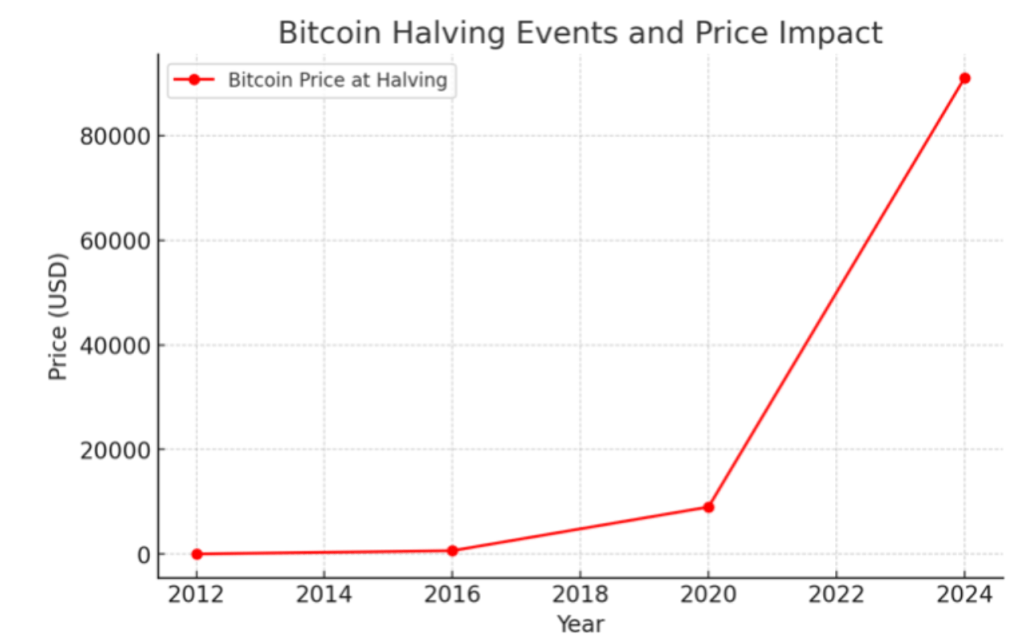
Graph 4: Bitcoin Halving Events and Price Impact (Graph displaying how past halving events have influenced Bitcoin’s price)
DECENTRALIZATION AND SECURITY
Bitcoin’s decentralized nature ensures that no single entity controls its network—making it resistant to censorship and centralized failures. Unlike traditional financial systems that rely on intermediaries such as banks and payment processors, Bitcoin transactions occur directly between users via the blockchain. This structure minimizes risks associated with third-party failures, government seizures or economic sanctions.
The Bitcoin network operates through a proof-of-work consensus mechanism, securing the blockchain against fraud and attacks. With thousands of nodes distributed globally, Bitcoin’s infrastructure remains resilient against cyber threats and system failures. The security of the Bitcoin network continues to strengthen as computing power (hash rate) dedicated to securing transactions increases.
CONCLUSION
Bitcoin’s resilience, increasing institutional and governmental recognition, scarcity and decentralized security model collectively indicate that Bitcoin is here to stay. As adoption continues and the financial landscape evolves, Bitcoin is poised to become a fundamental asset in the global economy. While challenges remain, including regulatory uncertainties and scalability issues—Bitcoin’s underlying principles and growing adoption suggest a long-term role in global finance. The continued development of second-layer solutions, such as the Lightning Network, and broader integration into financial services will further solidify Bitcoin’s position as a transformative digital asset.
REFERENCES
Antonopoulos, A. M. (2017). Mastering Bitcoin: Unlocking Digital Cryptocurrencies (2nd ed.). O’Reilly Media.
CoinGecko. (2024). Bitcoin Historical Data. Retrieved from https://www.coingecko.com
Nakamoto, S. (2008). Bitcoin: A Peer-to-Peer Electronic Cash System. Retrieved from https://bitcoin.org/bitcoin.pdf
Yermack, D. (2015). Is Bitcoin a real currency? An economic appraisal. Journal of Financial Economics, 117(1), 1-23. Retrieved from https://doi.org/10.1016/j.jfineco.2014.10.002
LEGAL DISCLAIMER
The information provided above is for informational purposes only and does not constitute financial, investment, or legal advice. The predictions and opinions shared are based on publicly available statements and insights from individuals in the Bitcoin and cryptocurrency space and are not guarantees of future performance. Cryptocurrency investments involve significant risks, including market volatility, regulatory changes and the potential loss of principal.
Always conduct your own research and consult with a qualified financial advisor or legal professional before making any investment decisions. The inclusion of specific predictions or influencers does not imply endorsement or verification of their views, strategies, or affiliations. Past performance and speculative forecasts are not indicative of future results.