EXECUTIVE SUMMARY
This white paper provides a comprehensive price analysis of Application-Specific Integrated Circuit (ASIC) Bitcoin mining computers, focusing on price trends and correlation with Bitcoin (BTC) prices since 2009. The research explores technological developments, market drivers and the economic dynamics shaping ASIC pricing in relation to BTC’s volatility. Additionally, it highlights significant market events and inflection points—offering empirical insights and long-term patterns.
INTRODUCTION
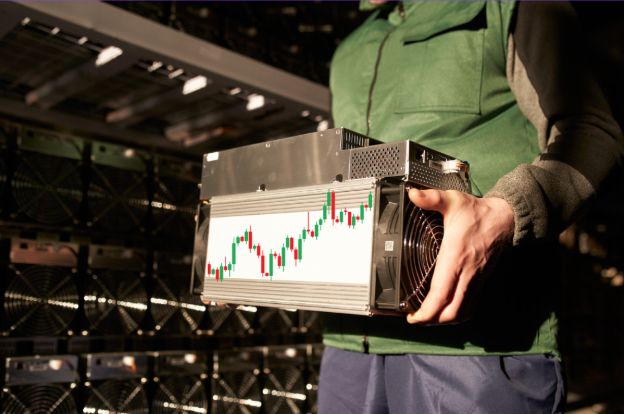
Bitcoin mining has evolved significantly since its inception in 2009—transitioning from CPU and GPU mining to the era of ASICs. ASICs are purpose-built devices optimized for the SHA-256 algorithm used in Bitcoin mining. Their superior efficiency, hash rate output and energy consumption optimization have made them essential in industrial-scale mining. The pricing of these devices has become a barometer for market sentiment and a direct reflection of Bitcoin’s economic viability. This paper explores how ASIC hardware has changed over time, how pricing has correlated with Bitcoin’s value and what factors have driven both technological and market trends in mining equipment.
EVOLUTION OF BITCOIN MINING HARDWARE
The evolution of Bitcoin mining hardware is a narrative of rapid technological progress driven by economic incentives. Initially, Bitcoin was mined using CPUs—standard personal computers. As more people began mining and network difficulty increased, miners transitioned to GPUs, which offered higher processing capabilities. The need for efficiency and profitability led to the development of FPGAs (Field-Programmable Gate Arrays), which, while not widely adopted, provided a stepping stone to the next revolution: ASICs.
ASICs are customized chips designed for a single purpose—in this case, Bitcoin mining. Their introduction around 2013 marked a turning point in the industry, enabling miners to achieve far superior performance and energy efficiency. These machines rendered previous technologies obsolete almost overnight. The market became increasingly competitive, with companies like Bitmain, Canaan and MicroBT racing to develop ever-more powerful units.
PRICE TRENDS OF ASIC MINERS (2013–2025)
ASIC pricing has exhibited strong cyclical behavior, reflecting broader crypto market trends, technological innovation, and production costs. Each period in Bitcoin’s price history has corresponded with a distinct pattern in ASIC valuation, influenced by investor sentiment, demand surges, and chip supply constraints.
- 2013–2016: The earliest ASICs were seen as revolutionary. Devices like Butterfly Labs Jalapeno and Bitmain’s Antminer S1 entered the market at prices ranging from $100 to $2,000. These prices were impacted not just by BTC’s moderate price fluctuations but also by rapid obsolescence as better models were introduced.
- 2017 Bull Run: As BTC surged to $20,000, the demand for miners skyrocketed. ASIC prices followed suit, particularly for popular models like the Antminer S9, which saw prices triple on secondary markets due to high demand and supply bottlenecks.
- 2018–2019 Bear Market: When BTC’s price fell below $4,000, ASIC prices plummeted. Used S9s could be found for under $200 and many operations shut down or sold hardware at a loss.
- 2020–2021 Bull Cycle: This was a golden age for ASIC producers. As BTC hit new highs above $60,000, ASICs such as the S19 Pro were in high demand. New units sold for over $12,000, with second-hand models commanding premium prices despite global supply chain challenges.
- 2022–2023 Downturn: The crypto market correction caused miners to exit or downsize operations. ASIC prices crashed, with some units being sold at or below production cost. This was compounded by energy crises and macroeconomic headwinds.
- 2024–2025 Post-Halving Rebound: The halving event in 2024 reduced block rewards, putting pressure on efficiency. Only the most power-efficient machines remained profitable, prompting a surge in demand for high-end ASICs. This led to a resurgence in ASIC pricing, particularly for models like the S19 XP and next-generation offerings from Bitmain and MicroBT.
HASHRATE EFFICIENCY (2009–2025)
Hashrate efficiency, measured in hashrate per dollar (GH/$ or TH/$), is a key metric in evaluating mining hardware performance. It encapsulates the tradeoff between computing power and capital expenditure. Over the years, improvements in chip design, cooling methods and energy optimization have contributed to exponential growth in efficiency.
| Year | Approx. Hashrate per Dollar (GH/$ or TH/$) |
| 2009 | ~0.001 GH/$ (CPU mining) |
| 2010 | ~0.01 GH/$ (GPU mining) |
| 2011 | ~0.05 GH/$ (FPGA) |
| 2012 | ~0.1 GH/$ |
| 2013 | ~1 GH/$ (early ASICs) |
| 2014 | ~5 GH/$ |
| 2015 | ~10 GH/$ |
| 2016 | ~20 GH/$ |
| 2017 | ~30 GH/$ |
| 2018 | ~50 GH/$ |
| 2019 | ~70 GH/$ |
| 2020 | ~100 GH/$ |
| 2021 | ~120 GH/$ |
| 2022 | ~150 GH/$ |
| 2023 | ~180 GH/$ |
| 2024 | ~250 GH/$ |
| 2025 | ~300 GH/$ (S19 XP, next-gen ASICs) |
CORRELATION BETWEEN ASIC PRICES AND BITCOIN PRICE
ASIC prices are intricately tied to Bitcoin’s market valuation. While many factors influence mining hardware costs, Bitcoin’s price serves as the primary driver. This correlation manifests due to profitability dynamics: higher BTC prices increase mining revenue—thereby increasing demand for efficient ASICs.
- Positive Correlation: When BTC prices surge, ASIC prices tend to rise shortly afterward. This lag is often due to lead times in purchasing decisions and manufacturing schedules.
- Hash Price Factor: The “hash price”—the revenue a miner earns per unit of hashrate—is a leading metric that determines miner profitability. When the hash price is high, miners can afford to pay more for hardware, pushing up ASIC prices.
- Supply Chain Constraints: During bull runs, chip shortages and logistical bottlenecks create price premiums. This was evident in 2021, when demand outstripped supply and ASICs sold for more than double their MSRP.
Conversely, in bear markets, prices collapse as mining becomes less profitable. This cyclical behavior mirrors investor sentiment and often leads to an influx of used hardware flooding secondary markets.

EXTERNAL INFLUENCES ON ASIC PRICES
ASIC prices are affected not only by Bitcoin’s valuation but also by broader factors influencing production and deployment. Understanding these externalities is essential to grasp the full picture.
- Electricity Costs: Mining profitability hinges on electricity expenses. In regions with cheap, abundant energy (e.g., parts of China, the U.S., and South America), demand for ASICs is consistently high. This creates regional price disparities.
- Technological Leaps: Innovations in chip architecture, heat dissipation, and firmware optimization can drastically reduce cost-per-hash. For example, the shift from 16nm to 7nm chips brought major improvements in energy efficiency.
- Regulatory Environment: Tariffs and legal crackdowns (like China’s 2021 mining ban) drastically shift ASIC demand. After the ban, a large volume of used miners entered the global market, driving down prices and redistributing mining hashpower to other countries.
- Moore’s Law Influence: Moore’s Law has historically predicted the doubling of transistor density approximately every two years. This law has underpinned the advancement of ASICs by enabling faster and more power-efficient chips at lower relative costs. However, in recent years, the slowing pace of Moore’s Law—due to fundamental limits in semiconductor manufacturing—has begun to constrain the pace of ASIC development. Nonetheless, between 2013 and 2020, Moore’s Law played a central role in reducing the cost-per-hash and dramatically improving efficiency. These advances enabled mass adoption and industrial-scale operations that were previously unfeasible.
CASE STUDIES
Case studies of specific ASIC models provide tangible evidence of market dynamics in action. By examining real-world performance, pricing, and lifecycle outcomes, we can better understand the evolving ASIC landscape.
- Bitmain Antminer S9 (2016–2021): This model became an industry staple due to its affordability and consistent performance. At its peak, the S9 accounted for a large percentage of global hashpower. It was initially priced around $500, surged past $3,000 during the 2017 bull run, and later dropped below $100 during the 2018 bear market. Despite its eventual obsolescence, its longevity and ROI made it a favorite among early institutional miners.
- Antminer S19 XP (2022–2025): Launched as one of the most powerful and efficient miners on the market, the S19 XP was priced near $11,000 at release. As BTC prices fell in 2022, it became more affordable, allowing firms to stockpile. In anticipation of the 2024 halving, demand surged once again. Its 140 TH/s hashrate and 21.5 J/TH energy efficiency make it a standard for competitive operations in the current cycle.
- MicroBT Whatsminer M30S++ (2020–2023): A high-efficiency unit delivering up to 112 TH/s with around 31 J/TH, it gained traction for its durability and performance during the 2020–2021 bull run. It was widely deployed in North America during the post-China ban mining migration.
- Canaan AvalonMiner 1246 (2021–2024): Known for ease of use and low noise levels, this model offered 90 TH/s and was competitively priced. Its mid-range power consumption made it a popular choice for small-to-mid scale operations.
OPTIMAL TIMING FOR ASIC PURCHASES
Timing the purchase of ASIC mining hardware is critical for achieving a favorable return on investment. Market cycles and pricing patterns suggest there are better and worse periods to invest in mining rigs.
- Post-Bear Market Lows: Historically, the best time to buy ASICs is at the bottom of a bear market, when prices are low due to capitulation and reduced competition. Miners who bought in late 2018 or mid-2022 enjoyed steep discounts and maximized ROI during the subsequent bull runs.
- Pre-Halving Period: Buying six to nine months before a Bitcoin halving event has proven advantageous. Hardware purchased during this window is likely to appreciate in value as the halving drives demand and profit margins tighten for inefficient miners.
- Avoiding Peak Bull Markets: During price rallies, ASIC prices spike due to limited supply and euphoria. Hardware bought at the top often loses value quickly when markets correct.
- Monitor Hash Price: Using tools like Hashrate Index to monitor hash price can help buyers identify when mining profitability supports hardware investment.
CONCLUSION
The ASIC mining hardware market is deeply intertwined with Bitcoin’s economic cycles. Understanding the history and mechanics of ASIC pricing reveals a layered ecosystem influenced by innovation, regulation and investor behavior. As Bitcoin matures, ASICs will continue to evolve—albeit more incrementally—as developers push against physical and economic limits. For miners and investors alike, anticipating these cycles and aligning procurement strategies accordingly can make the difference between profitability and obsolescence.
REFERENCES
Hashrate Index. (2023). Bitcoin Mining Metrics. Retrieved from https://hashrateindex.com
Houy, N. (2014). The Economics of Bitcoin Mining, or Bitcoin in the Presence of Adversaries. Retrieved from https://hal.science/hal-00938852
Cambridge Centre for Alternative Finance. (2021). Bitcoin Mining Map. Retrieved from https://ccaf.io/cbeci/index
Bitmain. (2023). Antminer Product Listings. Retrieved from https://shop.bitmain.com
Canaan. (2023). AvalonMiner Series. Retrieved from https://canaan.io
CoinDesk. (Various years). Market Reports. Retrieved from https://www.coindesk.com
LEGAL DISCLAIMER
The information provided above is for informational purposes only and does not constitute financial, investment, or legal advice. The predictions and opinions shared are based on publicly available statements and insights from individuals in the Bitcoin and cryptocurrency space and are not guarantees of future performance. Cryptocurrency investments involve significant risks, including market volatility, regulatory changes and the potential loss of principal.
Always conduct your own research and consult with a qualified financial advisor or legal professional before making any investment decisions. The inclusion of specific predictions or influencers does not imply endorsement or verification of their views, strategies, or affiliations. Past performance and speculative forecasts are not indicative of future results.