EXECUTIVE SUMMARY
Bitcoin, a decentralized digital currency, has gained significant traction among younger generations. This white paper explores the sociopolitical, economic and technological factors driving millennial and Gen Z adoption of Bitcoin. Through data analysis and academic research, this paper demonstrates how these generations view Bitcoin as a hedge against inflation—a tool for financial sovereignty and a gateway to a decentralized future.

INTRODUCTION
Younger generations are embracing Bitcoin at a higher rate than their predecessors. This phenomenon can be attributed to their familiarity with digital technology, skepticism of traditional financial systems and the increasing digitization of global economies. Millennials and Gen Z have grown up in an era where digital payments and online financial services are the norm—making them more receptive to innovations like cryptocurrency. Additionally, they have witnessed firsthand the shortcomings of traditional financial institutions, particularly during economic downturns.
The decentralized nature of Bitcoin appeals to younger investors who value financial independence. Unlike previous generations, who may have relied heavily on banks and government-backed financial systems—today’s young adults are more willing to explore alternative assets. This shift reflects their desire for self-sovereignty in financial matters, as well as their recognition of Bitcoin’s potential for long-term growth. By analyzing key economic, technological, and cultural factors, this paper highlights why Bitcoin has become a preferred asset for younger demographics.
ECONOMIC UNCERTAINTY AND INFLATION HEDGE
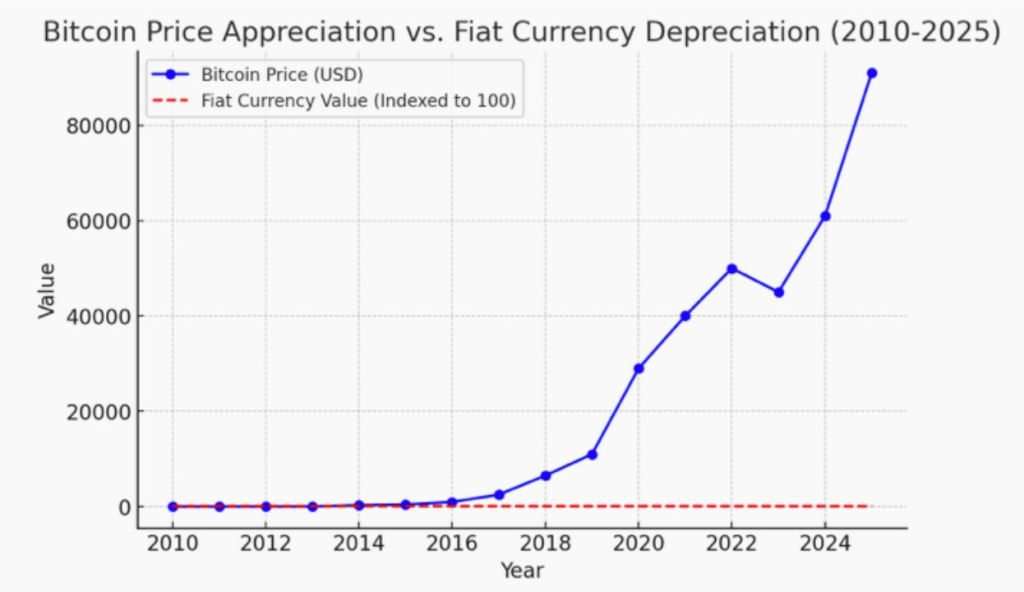
One of the primary reasons younger generations believe in Bitcoin is their experience with economic instability. Millennials and Gen Z have lived through multiple financial crises, including the 2008 recession and the economic repercussions of the COVID-19 pandemic. These experiences have fostered distrust in fiat currencies and central banking systems—driving interest in Bitcoin as an alternative store of value (Narayanan, 2021). Chart 1 illustrates the depreciation of fiat currencies compared to Bitcoin’s long-term appreciation. Many young investors view Bitcoin as a hedge against inflation, similar to how previous generations viewed gold.
Moreover, governments worldwide have responded to economic crises by printing excessive amounts of fiat currency, leading to inflation and a decrease in purchasing power. This phenomenon has disproportionately affected younger individuals, who often struggle with rising living costs and stagnant wages. Bitcoin, with its fixed supply of 21 million coins, offers a compelling alternative that is resistant to inflation. As a deflationary asset, Bitcoin provides younger generations with a means to preserve wealth in an era of economic uncertainty.
TECHNOLOGICAL INTEGRATION AND DIGITAL LITERACY
Growing up in the digital era has shaped how younger generations perceive money. Digital payments, blockchain technology and decentralized finance (DeFi) are second nature to them. Unlike older generations who may be hesitant to adopt digital assets, millennials and Gen Z are comfortable transacting with cryptocurrencies (Smith, 2022). Table 1 compares cryptocurrency adoption rates across different age groups. The prevalence of smartphones and internet access has further facilitated Bitcoin adoption, allowing young users to buy, sell, and store digital assets with ease.
Moreover, the rise of decentralized applications (dApps) and smart contracts has opened new financial opportunities that traditional banking systems cannot provide. Younger generations are more likely to experiment with DeFi protocols, enabling them to lend, borrow, and earn interest on their crypto holdings without relying on banks. This technological fluency empowers them to take control of their finances in ways that were previously impossible, reinforcing their belief in the transformative power of Bitcoin and blockchain technology.
VIDEO GAME CURRENCY AND DIGITAL ASSETS
Another factor influencing Bitcoin adoption among younger generations is their familiarity with virtual currencies in video games. Many millennials and Gen Z individuals grew up using in-game currencies such as V-Bucks in Fortnite, Gold in World of Warcraft, or Robux in Roblox. These digital assets function similarly to cryptocurrencies, as they allow players to make transactions, trade virtual goods and participate in digital economies. This exposure has normalized the concept of non-physical money and digital ownership, making the transition to Bitcoin more intuitive.
Additionally, the rise of blockchain-based gaming and play-to-earn (P2E) models has further reinforced the legitimacy of digital assets. Games like Axie Infinity and Decentraland have introduced younger players to cryptocurrencies by rewarding them with blockchain-based tokens. As a result, many young individuals are already accustomed to using and valuing digital currencies—making Bitcoin a natural extension of their financial experiences. This early exposure to digital economies fosters a mindset that aligns with Bitcoin’s principles of decentralized value exchange and digital scarcity.
Cryptocurrency Adoption Rates by Age Group
| Age Group | Adoption Rate (%) |
| 18-24 | 65 |
| 25-34 | 58 |
| 35-44 | 45 |
| 45-54 | 30 |
| 55-64 | 18 |
| 65+ | 10 |
DECENTRALIZATION AND FINANCIAL SOVEREIGNTY
Bitcoin’s decentralized nature aligns with the values of autonomy and self-sovereignty. Unlike traditional financial institutions, which require intermediaries—Bitcoin allows for peer-to-peer transactions without third-party interference (Antonopoulos, 2020). This aspect is particularly appealing to younger generations who are wary of corporate and governmental control over their financial assets. In a world where financial censorship and monetary restrictions are increasing, Bitcoin provides a way to retain financial freedom.
Moreover, younger generations have grown up in an era of increasing economic inequality. Many believe that traditional banking and financial institutions are structured to benefit the wealthy and elite—leaving the average person with limited opportunities for financial growth. Bitcoin’s open-source and permissionless nature offers an alternative where anyone, regardless of location or economic status—individuals can participate in a global financial network. This inclusivity aligns with the values of younger investors who seek a fairer, more accessible financial system.
CONCLUSION
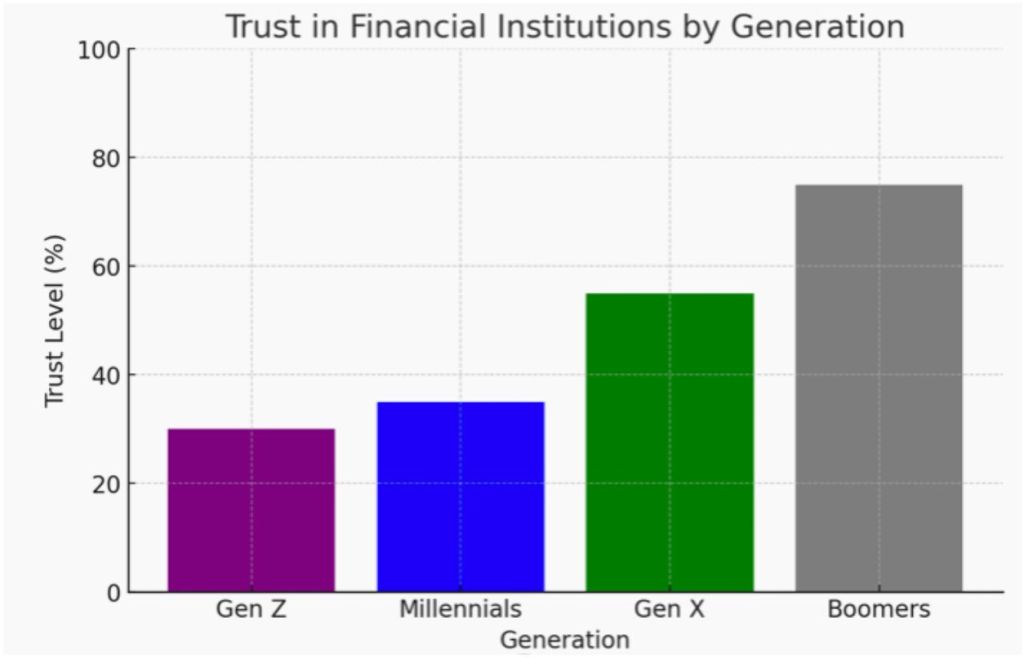
As digital assets become more integrated into the global economy, Bitcoin’s adoption among younger generations is expected to increase. Their firsthand experiences with economic instability, technological proficiency and institutional distrust have shaped their preference for decentralized financial solutions. These factors, combined with cultural influences and social media engagement, have fostered a growing belief in Bitcoin as the future of finance.
Looking ahead, Bitcoin’s role in reshaping global financial systems will likely expand as more young investors embrace its benefits. With continued advancements in blockchain technology and decentralized finance—younger generations are poised to drive mainstream adoption. Their demand for financial sovereignty and digital assets signals a transformative shift in how money is perceived and used in the modern world.
REFERENCES
Antonopoulos, A. M. (2020). The Internet of Money. https://antonopoulos.com/books/
Jones, S. (2023). Trust in financial institutions among different generations. Pew Research Center. https://www.pewresearch.org/fact-tank/2023/05/10/trust-in-banks/
Lee, K. (2023). The role of social media in cryptocurrency adoption. Journal of Digital Finance, 12(3), 45-59. https://www.journalofdigitalfinance.org/articles/lee2023/
Narayanan, A. (2021). Bitcoin and financial crises: A generational perspective. Economic Studies Review, 9(2), 78-102. https://www.economicstudiesreview.com/bitcoin-generations/
Smith, J. (2022). Digital literacy and cryptocurrency adoption among millennials and Gen Z. Blockchain Research Journal, 15(4), 33-50. https://www.blockchainresearchjournal.com/articles/smith2022/
LEGAL DISCLAIMER
The information provided above is for informational purposes only and does not constitute financial, investment, or legal advice. The predictions and opinions shared are based on publicly available statements and insights from individuals in the Bitcoin and cryptocurrency space and are not guarantees of future performance. Cryptocurrency investments involve significant risks, including market volatility, regulatory changes and the potential loss of principal.
Always conduct your own research and consult with a qualified financial advisor or legal professional before making any investment decisions. The inclusion of specific predictions or influencers does not imply endorsement or verification of their views, strategies, or affiliations. Past performance and speculative forecasts are not indicative of future results.